The Power of Spirit: Honoring the Resilience of Indigenous Women and the Fight for Justice.
In life, Morgan Harris and Marcedes Myran were among the many Indigenous women whose voices were often drowned out by a system that valued them less, if at all. These women, from Long Plain First Nation, were seen as powerless by those who refused to recognize their inherent worth. However, after their tragic deaths, their spirits became a force more powerful than anything they could have ever imagined in life. The communities of Winnipeg, particularly Indigenous peoples, ensured that these women’s spirits would not fade into obscurity. They became symbols of resistance, strength, and unity—a movement that refused to allow the injustice of their deaths to go unnoticed.
The journey to find Morgan and Marcedes was not an easy one. It was riddled with delays, rejections, and the harsh realities of systemic discrimination. The provincial government of Manitoba, led by the Progressive Conservative party, argued strongly against searching the landfill where the remains of these two women were believed to be. They cited many concerns about the feasibility of the search and the safety of those involved, but for many, this refusal was about money and the unwillingness of the government to spend resources on people they saw as less worthy. Many said that if the victims were women of European heritage, the landfill would have been torn apart. This is a stark reflection of how Indigenous lives are treated as disposable.

In their grief, Morgan’s and Marcedes’ families were subjected to trauma after trauma, as governments (federal, provincial, and municipal) repeatedly turned them away. The refusal to search the landfill felt like a betrayal, a denial of the very humanity of the women whose lives had been taken so violently.
But despite this, the spirits of these two women would not be silenced. The resistance from the Indigenous communities was unwavering. The efforts to locate their remains became a collective fight for justice and dignity. In June 2024, I had the privilege of attending a powwow at the search site, the city dump where the remains were believed to be. It was an emotional day—people from all walks of life were there, showing up in solidarity. Tipis were erected, and a sense of community permeated the air. I stood among the people in my military uniform, part of the Grand Entry as a veteran, an act of support for the families and their ongoing fight. It was unfortunate, but no police officers attended, leaving the families to continue the fight alone. You need to be there in tough times too.

While the provincial government continued to drag its feet, the election of Wab Kinew as the first First Nations Premier of Manitoba in 2023 marked a turning point. Under his leadership, the excavation of the landfill began, and in February 2025, the remains of Morgan Harris were found. It was a bittersweet victory, a moment that brought relief to the family but also underscored the years of delay that had been inflicted on them. And yet, there was still work to be done. The search for Marcedes Myran and the other victims continues, and the fight for justice is far from over.
Elder Geraldine Shingoose, an activist has been a steady source of support for the families throughout this journey. She was there at every ceremony, offering guidance and strength. Her words resonate deeply: “Indigenous women are important. They have daughters, they have cousins, they have sisters, they are grandmothers… no one should have stayed in that landfill that long.” She reminds us that this fight is not just for Morgan and Marcedes—it is for all Indigenous women who have been subjected to violence and systemic neglect.
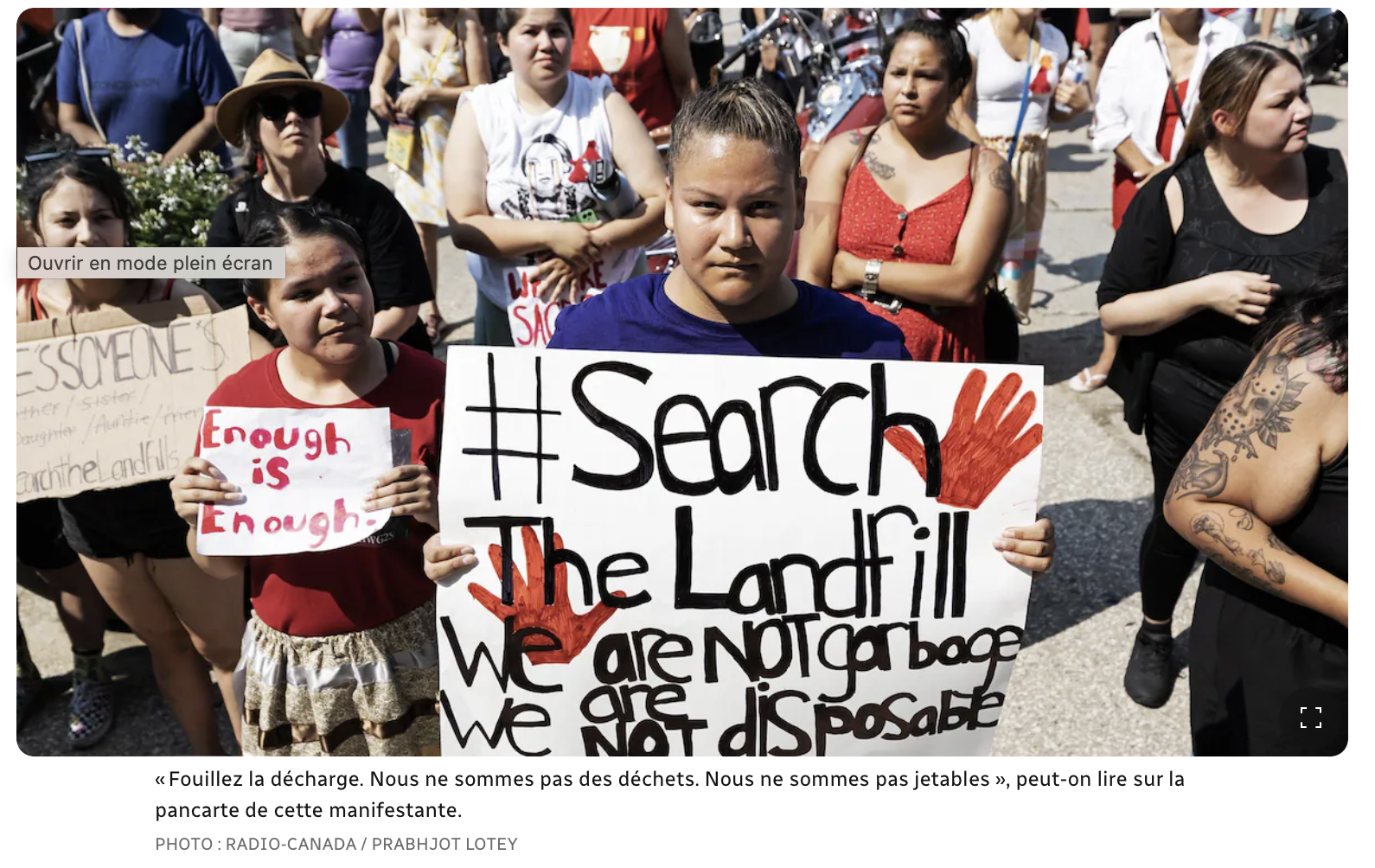
While we are still in the early stages of healing, the fight for justice continues. The journey of Morgan Harris and Marcedes Myran is not just their own. It is the story of every Indigenous person who has had to fight for recognition, dignity, and justice in a world that has too often ignored them.
What is worse, death at the hands of a serial killer or being ignored by society and the justice systems made to protect you?
Let us honour their spirits by continuing the fight for a better future, where no one is left behind, and where every life is valued.
https://ici.radio-canada.ca/espaces-autochtones/2147045/femmes-autochtones-tuees-discrimination


