Showing posts with label politics. Show all posts

Friday, 20 March 2026

Crossing the Floor: Serving the Party or Serving the People?/Changer de parti : servir le parti ou servir le peuple?

When an MP crosses the floor, the issue is not simply that they have changed parties. The real issue is whom they are serving: the party, the government and the promise of greater influence, or the people who elected them under a different banner.

That is why crossing the floor is never a small matter.

Nunavut MP Lori Idlout has left the NDP to join the Liberal caucus, bringing Prime Minister Mark Carney’s government to 170 seats, just short of a majority in the House of Commons. The NDP has long held that if an MP changes parties, that decision should be put back to voters.

I understand why an MP might make that choice. Politics is not easy. A person can reach the limits of what they believe they can accomplish inside a party. They may feel blocked. They may feel their constituents need results, not symbolism. They may conclude that, to help their people, they need to move closer to power.


For an Indigenous MP, that pressure can be even greater. Our communities do not send us to Ottawa simply to occupy a seat. They send us there to fight for housing, language, sovereignty, fairness and recognition in a system that has too often ignored them. The temptation to move closer to power in order to deliver something tangible is real.

I can believe Lori Idlout sincerely feels that way. After years in opposition, she may have concluded that she had reached the limit of her ability to influence politics for Nunavut. She may believe she needs to try something different.

But she also has a democratic obligation to return to her citizens and ask for their approval before carrying on under a different banner.

There is a difference between following your conscience and borrowing a mandate that was never given to you. Nunavummiut did not elect a Liberal MP. If Idlout now believes the Liberal government is the best vehicle for serving Nunavut, then she should have the courage to say so directly to her constituents and seek a new mandate.

That is the clean path. That is the honourable path.

Some will argue that voters chose the person, not just the party. There is truth in that. An MP is not a machine. We are sent to Ottawa to think, to judge and to follow our conscience.

But conscience does not erase accountability. It demands it.

This matters even more on Indigenous issues. Indigenous MPs are often elected because people believe they will challenge power, not simply join it. They are expected to speak hard truths on matters such as the Indian Act, child welfare, language rights, housing and the unequal treatment Indigenous peoples still face across Canada. Once inside government caucus, that freedom can narrow. Party discipline is real. The pressure to stay quiet, stay loyal and stay useful is real.

That is why Lori Idlout’s decision carries consequences beyond a change of party label. Bill S-2, which would amend the Indian Act on status, is currently before Parliament. Her future votes will now be watched closely. Indigenous peoples have seen too many governments promise change while managing dissent. We do not need Indigenous faces used to soften government policy. We need Indigenous voices prepared to defend their people, even when that is inconvenient.

There is also the larger political reality. With the Liberals now so close to a majority, every defection carries enormous consequence. This is not just a personal decision. It reshapes Parliament itself.

Lori Idlout may well be considered for a larger role, perhaps even a northern ministerial portfolio. But that possibility only sharpens the democratic issue. Will joining government strengthen Nunavut’s voice, or fold it into the machinery of party discipline?

In politics, we must always ask whether we are here to build a political party or to serve the people who sent us. Sometimes the answer is uncomfortable. Sometimes it requires sacrifice.

If Lori Idlout believes she made the right choice, then she should trust Nunavummiut enough to let them judge it.

That is what a sacred trust requires.


// Francais //


Changer de parti : servir le parti ou servir le peuple?

Lorsqu’un député change de parti, le véritable enjeu n’est pas simplement qu’il ait changé de bannière. La vraie question est de savoir qui il sert : le parti, le gouvernement et la promesse d’une plus grande influence, ou les gens qui l’ont élu sous une autre bannière.

C’est pourquoi changer de parti n’est jamais un geste anodin.

La députée du Nunavut, Lori Idlout, a quitté le NPD pour se joindre au caucus libéral, comme l'avait fait le député inuk Peter Ittinuar en 1982, ce qui porte le gouvernement du premier ministre Mark Carney à 170 sièges, tout juste sous le seuil de la majorité à la Chambre des communes. Le NPD soutient depuis longtemps que, lorsqu’un député change de parti, cette décision devrait être soumise de nouveau aux électeurs.

Je peux comprendre pourquoi un député ferait un tel choix. La politique n’est pas simple. On peut atteindre les limites de ce qu’on croit pouvoir accomplir à l’intérieur d’un parti. On peut se sentir bloqué. On peut croire que ses électeurs ont besoin de résultats, et non seulement de symboles. On peut en venir à la conclusion que, pour aider son peuple, il faut se rapprocher du pouvoir.

Pour un député autochtone, cette pression peut être encore plus grande. Nos communautés ne nous envoient pas à Ottawa simplement pour occuper un siège. Elles nous y envoient pour défendre le logement, les langues, la souveraineté, l’équité et la reconnaissance dans un système qui les a trop souvent ignorées. La tentation de se rapprocher du pouvoir afin d’obtenir des résultats concrets est bien réelle.

Je peux croire que Idlout le ressente sincèrement. Après des années dans l’opposition, elle a peut-être conclu qu’elle avait atteint la limite de ce qu’elle pouvait accomplir politiquement pour le Nunavut. Elle croit peut-être devoir essayer autre chose.

Mais elle a aussi l’obligation démocratique de retourner vers ses citoyens et de leur demander leur approbation avant de poursuivre son mandat sous une autre bannière.

Il y a une différence entre suivre sa conscience et emprunter un mandat qui ne vous a jamais été donné. Les Nunavummiut n’ont pas élu une députée libérale. Si Idlout croit maintenant que le gouvernement libéral est le meilleur véhicule pour servir le Nunavut, alors elle devrait avoir le courage de le dire franchement à ses électeurs et de solliciter un nouveau mandat.

C’est la voie la plus nette. C’est la voie la plus honorable.

Certains diront que les électeurs ont choisi la personne, pas seulement le parti. Il y a une part de vérité là-dedans. Un député n’est pas une machine. Nous sommes envoyés à Ottawa pour réfléchir, juger et suivre notre conscience.

Mais la conscience n’efface pas l’obligation de rendre des comptes. Au contraire, elle l’exige.

Cela est encore plus vrai lorsqu’il s’agit d’enjeux autochtones. Les députés autochtones sont souvent élus parce que les gens croient qu’ils vont confronter le pouvoir, et non simplement s’y rallier. On s’attend à ce qu’ils disent des vérités difficiles sur des questions comme la Loi sur les Indiens, la protection de l’enfance, les droits linguistiques, le logement et les inégalités que subissent encore les peuples autochtones partout au Canada. Une fois à l’intérieur du caucus gouvernemental, cette liberté peut se rétrécir. La discipline de parti est réelle. La pression de rester discret, loyal et utile l’est aussi.

C’est pourquoi la décision de Idlout a des conséquences qui dépassent un simple changement d’étiquette politique. Le projet de loi S-2, qui modifierait la Loi sur les Indiens en matière de statut, est actuellement devant le Parlement. Ses prochains votes seront désormais observés de près. Les peuples autochtones ont déjà vu trop de gouvernements promettre le changement tout en gérant la dissidence. Nous n’avons pas besoin de visages autochtones utilisés pour adoucir les politiques gouvernementales. Nous avons besoin de voix autochtones prêtes à défendre leur peuple, même lorsque cela dérange.

Il y a aussi une réalité politique plus large. Alors que les libéraux sont désormais si près d’une majorité, chaque défection a des conséquences énormes. Ce n’est pas seulement une décision personnelle. Cela transforme le Parlement lui-même.

Lori Idlout sera peut-être appelée à jouer un rôle plus important, peut-être même à occuper un portefeuille ministériel lié au Nord. Mais cette possibilité rend la question démocratique encore plus pressante. Son entrée au gouvernement renforcera-t-elle la voix du Nunavut, ou l’intégrera-t-elle simplement à la machine de la discipline partisane?

En politique, nous devons toujours nous demander si nous sommes là pour bâtir un parti politique ou pour servir les gens qui nous ont envoyés. Parfois, la réponse est inconfortable. Parfois, elle exige un sacrifice.

Si Lori Idlout croit avoir pris la bonne décision, alors elle devrait faire assez confiance aux Nunavummiut pour les laisser en juger.

C’est cela, le sens d’une confiance sacrée.


Il y a la carotte.
Il y a la promesse d’une récompense.
Mais l’avenir appartient-il à toi,
ou à nous?


https://ici.radio-canada.ca/espaces-autochtones/2238515/transfuge-lori-idlout-npd-plc-autochtones 

Monday, 7 April 2025

A Legacy That Haunts Me: A Personal Reflection on Cultural Genocide and the Ties That Bind Us

As I write, I am filled with sadness and a sense of illness. A video sent to me on Twitter initially seemed like just another far-fetched conspiracy theory, but as I dug deeper, the reality set in. 


The video captured a 1965 interview with Robert J. Carney, a Catholic educator and federal day/Indian residential school principal in the Northwest Territories, who described Indigenous children as "culturally retarded." His words, though reflective of the time, were harsh then—and remain unforgivable today. Carney explained that “culturally retarded” referred to children from Native backgrounds who hadn’t attended school regularly or were behind in their studies. His words were steeped in ignorance and systemic racism—language that was damaging then and remains damaging now.


As I reflect on these words, I can’t help but wonder: Do people see me the same way? Do they consider all Indigenous people "retarded" because of our identity? These thoughts haunt me, especially when I think back to my time in Parliament. I fought an election that many thought I couldn’t win, and yet, we triumphed. But even in victory, I faced constant reminders that my space was limited to Indigenous issues alone. “This is your space; don’t speak outside of it,” was the unspoken rule I faced within the Liberal party. Whenever the media sought a comment from me, it was always on Indigenous issues. My contributions outside these boundaries were dismissed.


Years of proving myself, building a resume I thought would stand on its own, felt minimized to “you’re good on this one thing.” I constantly had to fight for a seat at the table where my voice was valued—not just as an Indigenous person, but as a human being with thoughts and opinions that mattered beyond my heritage. This reality became even clearer when I realized that people like Mark Carney—despite his father’s controversial legacy—are not bound by these limitations. His father’s ties to the system of cultural erasure in the Northwest Territories are undeniable. How much of Carney’s perspective is shaped by his father’s legacy?


Carney’s legacy is tangled in colonial history. While we may not be responsible for the actions of our parents, we must acknowledge their impact on shaping the present. The scars of residential schools, day schools, and the destruction of our languages and cultures run deep, passed down through generations.


Mark Carney has a chance to shape the narrative moving forward. I wonder how he will approach the reckoning that is long overdue. Will he address the harms of the past in a meaningful way? Will he work toward reconciliation, not just as a political gesture, but as a genuine commitment to undoing the legacy of cultural genocide still affecting Indigenous peoples? And perhaps, could he stop talking about Trump as if he’s the only thing that matters? Indigenous struggles are often sidelined, and it’s time for leaders like Carney to give these issues the attention they deserve.


The truth is, the reality of these atrocities is often swept under the rug. We are told to move on, but the past continues to haunt us. As an IRS survivor’s child, I am constantly reminded of the life my father never had. His experiences shaped his world in ways I can never fully understand. But what I can do is ensure that his legacy—his resilience—is honored. I strive to live the life he never had the chance to live. I strive to be good to my children, offer help to those in need, and contribute to my community.


When I watch videos like the one about Robert Carney, I feel grief and anger. This history is not something we can easily forget, nor should we. Even today, many Indigenous peoples still face the consequences of a system designed to destroy our culture, language, and identity.


I understand why Carney, when he came to Winnipeg on April 1, could not use the word “Indigenous” in his speech. For so long, terms like “Indian,” “Native,” or “culturally retarded” have been used to define us in a way that was not our own. The reluctance to embrace the term “Indigenous” reflects discomfort in confronting the truth of what these terms represented—a system built on the destruction of our cultures, erasure of our languages, and undermining of our identity. But as much as I understand why the word may have been avoided, I feel it’s time to stop hiding behind these old terms. It’s time to reckon with the past.


Why did Robert Carney leave the Northwest Territories when Mark was six? Was it because he didn’t want his children attending school with what he referred to as the "culturally retarded"? Did they sit around the dinner table, and if Mark asked why they no longer lived in the NWT, was the answer simply that they wanted him to have "better opportunities, better friends"? What motivated the decision to leave, and how did this decision, tied to his father’s work, shape Mark’s understanding of Indigenous peoples?


In education, there is the written curriculum and the unwritten curriculum—the words left unsaid. Which is more important? Stephen Harper once said it wasn’t the major decisions that mattered, but the 150 decisions a leader makes throughout the day. How was Carney shaped by the subconscious values in his life?

https://ici.radio-canada.ca/espaces-autochtones/2154487/robert-carney-enfants-autochtones-heritage 

Saturday, 5 April 2025

Mark Carney Came to Winnipeg — and Forgot Indigenous Peoples

Mark Carney came to Winnipeg. Three First Nations chiefs in full headdress stood proudly in the middle of a room filled with over 800 people. They waited patiently. They listened carefully. They stood with dignity, hoping for a signal — just a few words — that they were seen, that they were heard, that they were part of Mark Carney’s vision for Canada. But not a single Indigenous word was spoken. His speech, curiously delivered one day after the National Day of Indigenous Languages, never once mentioned reconciliation, Jordan’s Principle, MMIWG, or the ongoing search for the missing and murdered women believed to be in the Prairie Green landfill just north of Winnipeg. 

Instead, Carney said: “The shock of this betrayal. But we should never ever forget the lessons — we have to look out for ourselves.” He was not talking about Canada’s betrayal of Indigenous peoples. He was not placing himself in the moccasins of First Nations. He was speaking of himself. Of Donald Trump. Of economic power, global markets, and his personal journey. The words fell flat in a place called Manitoba, a name rooted in Cree: manitôhkân, a place of spiritual power. 


Where has Mark Carney been the last few years? He may be a man of global finance and polished speeches, but he seems to have missed the most important story Canada has been telling itself: the unfinished business of reconciliation. A story about healing, truth, justice, and the hope that Indigenous and non-Indigenous peoples can walk forward together in dignity and mutual respect. To show up in Manitoba and not mention Indigenous peoples — especially with three hereditary chiefs standing right in front of him — is a political oversight of monumental proportions. It’s also deeply personal. 


As a former Member of Parliament, I’ve seen many leaders come and go. Some speak of reconciliation as a checklist. Others have tried — truly tried — to understand what it means to rebuild trust and nation-to-nation relationships. Mark Carney, for all his global experience, seemed unaware of the room he was standing in. Unaware of the land. Unaware of its history. 


If Mark Carney hopes to earn a mandate from Canadians, it cannot come simply from convincing Liberal insiders or appealing to disillusioned NDP voters. He must also convince Indigenous peoples that they matter — that they will not be forgotten once the ballots are counted and the speeches fade. But after this speech, maybe Indigenous people will choose to stay home. Maybe they will resist. Maybe they will see his possible majority government not as a triumph of democracy, but as another chapter in a long story of being ignored. If this is the beginning of his campaign, perhaps the best Canada can hope for is a minority government — one that forces Carney to listen, to consult, to learn. 

Jean Chrétien once told me in the House of Commons, “Sometimes it’s better the devil you know than the devil you don’t.” He chuckled when he said it. But it left me wondering then — and now — who is Mark Carney? If he’s serious about leading this country, he must recognize that Indigenous peoples are not a checkbox or a photo opportunity. 

We are nations. We are families. We are leaders. And we are voters. When you come to Manitoba — when you come to manitôhkân — you don’t have to say everything. But say something. Acknowledge the nations who were here before Confederation, who signed treaties, who defended this land, and who still hope — against the odds — that Canada can be a place of justice for all. 

Reconciliation is not just an ideal. It’s a responsibility. And silence is not neutrality — it is a choice. Mr. Carney, if you want to lead this country, don’t just talk to bankers and party faithful. Speak to the people who have long been left out of the Canadian dream. Speak to us. Or at the very least, notice when we’re standing right in front of you.


https://ici.radio-canada.ca/espaces-autochtones/2153752/mark-carney-campagne-maniotoba-reconciliation 


Monday, 24 March 2025

The Uncomfortable Irony: Prioritizing Military Ships Over Indigenous Children’s Future: Federal Election 2025

On a sunny Sunday, while Canadians enjoy their coffee or still sleep in, the Prime Minister walks over to the Governor General's residence to call for a federal election. This moment symbolizes what is important, but also highlights what is often ignored.

One of the final acts of Justin Trudeau’s government and the beginning of Mark Carney’s was the approval of $22 billion in spending for the Irving Shipyards to build naval destroyers. As Canada moves forward with this costly military procurement, we must ask: how can we justify such massive spending when the most vulnerable among us—Indigenous children—remain trapped in a broken system?

This decision highlights a glaring and uncomfortable irony: our government is willing to invest heavily in defense projects, yet continues to neglect the basic human rights of Indigenous children. The $22 billion naval program is the largest defense procurement in Canadian history, but while military preparedness is deemed essential, there is an equally pressing need to invest in the future of our children—particularly Indigenous children who have long suffered from systemic neglect.


Indigenous teachings emphasize thinking in terms of seven generations, urging us to make decisions that benefit not just our present, but future generations. If we are truly concerned about security, we must first ensure that our youth have the foundation they need to thrive, not just survive. It’s a glaring contradiction that, while billions are being allocated to military ships, our children’s basic rights are still in question, and the government is dragging its feet on resolving the issues that directly affect their future.

The ongoing legal battle concerning the welfare of First Nations children is a key example of the government’s failure to act. This battle, which began under the Conservative Harper government and continued throughout Trudeau’s tenure, has seen multiple rulings from the Canadian Human Rights Tribunal. The Tribunal has repeatedly found that the federal government discriminates against Indigenous children by underfunding essential child welfare services and failing to implement Jordan’s Principle—a policy meant to ensure that Indigenous children receive public services without discrimination. Despite these rulings, the government continues to delay compensation and reforms that could provide these children with the justice they deserve.

This refusal to act is not only an affront to these children’s dignity but also a clear violation of their human rights. Cindy Blackstock, a staunch advocate for Indigenous children’s rights, has fought for years to bring attention to these injustices. Yet, despite her tireless efforts, the government continues to ignore the Tribunal’s rulings, failing to negotiate a fair settlement or take the necessary steps to make meaningful changes. Instead, we see the government actively diverting billions to military contracts, while the lives of children remain at risk in a system designed to fail them.

Why such urgency when it comes to military procurement, yet such profound delay in ensuring that Indigenous children receive the support they need? The government seems more focused on purchasing destroyers than on securing the future of its youth. The cost of the military ships will not ensure the safety or future of Canada’s most vulnerable populations, but the cost of justice for First Nations children would offer hope—a real chance at breaking the cycle of poverty, trauma, and inequality that has plagued them for generations.


The government’s failure to negotiate on the child welfare case speaks volumes. The refusal to settle and provide the necessary compensation for the harm done to these children is not just a bureaucratic delay—it is an ongoing violation of their rights. Every day this case continues is another day of suffering for Indigenous children deprived of their basic needs, while the government expends resources on defense projects that fail to address the real threats to our society. If only Indigenous children were as good friends to the Irvings as they are to the Liberal Party of Canada.

If only our children were missiles or bullets, maybe then the government would prioritize their future. Maybe then the resources would be diverted toward ensuring that these children have what they need to thrive, not just survive. The fact that we continue to struggle with issues like child welfare for Indigenous youth while simultaneously making military investments of such magnitude is a stark reminder of our national priorities—priorities that seem to lack a clear vision for the future of our children.

https://ici.radio-canada.ca/espaces-autochtones/2150087/depenses-militaires-enfance-autochtone 

Wednesday, 5 March 2025

 Open Letter to Prime Minister Justin Trudeau

(with copies to Grand Chief Cindy Woodhouse and all concerned parties)

Dear Prime Minister Trudeau,

I write to you in these final days of being Prime Minister, with a new Liberal leader soon to be chosen on March 9th and a general election likely to follow. It has been a remarkable nine years, but time is running short, and there is an urgent matter that must be fully resolved now, rather than left to the uncertainties of a new government. That matter is the long-overdue resolution of the First Nations child welfare dispute—a cause that has persisted under your leadership, with First Nations communities and, above all, their children still awaiting justice.


Much progress has been made, yet despite a potentially historic $47.8-billion proposal to overhaul on-reserve child welfare services, the process remains tangled in legal and political challenges. The Assembly of First Nations (AFN) Chiefs rejected the initial proposal and established the National Children’s Chiefs Commission (NCCC), chaired by Chief Pauline Frost of Vuntut Gwitchin First Nation, to reset negotiations. Canada, however, refuses to meet with the NCCC. Minister of Indigenous Services Patty Hajdu has stated there is “confusion” around the roles of the AFN and the NCCC. Meanwhile, the AFN insists it has clearly communicated that the NCCC should lead negotiations. This standoff directly harms children, families, and communities.

As Elders have often counseled me, kisēwātisiwinihk—speaking and acting from the heart—must guide our decisions. When I served as an MP under your leadership, I received a call from your office during the 2019 election, asking me not to speak publicly about the lawsuit involving First Nations children. I was assured it would be resolved as soon as the election ended. Yet another five years have passed, prolonging injustice. I pray I was not wrong. 

Meanwhile, the Canadian Human Rights Tribunal (CHRT) continues to uphold its 2016 finding that Canada’s child welfare system is discriminatory. Some chiefs, like Derek Nepinak of Minegoziibe Anishinabe, want an “opt-in” clause; others support the new NCCC. Even AFN National Chief Cindy Woodhouse Nepinak faces criticism from regional chiefs who question her closeness to your government.

Amid these political and legal disputes, we risk losing sight of who matters most: the children. They face the damaging consequences of an underfunded, inequitable system—conditions reminiscent of the tragedies once perpetuated by residential schools. Rather than cooperation, letters and legal motions circulate among your ministers, the AFN, the NCCC, and the First Nations Child and Family Caring Society. When the only real mandate should be the well-being of First Nations children, we see endless conflict.


With a leadership transition looming, and a possible new government on the horizon, we cannot assume a Conservative administration would uphold this settlement. If we wait, these children will remain entangled in legal battles instead of receiving the support they deserve—another tragic echo of past injustices. After nine years of litigation, the time to finish this work is now. I know you are busy with President Trump and trade disputes, but the AFN’s office is within walking distance—close enough for face-to-face conversation. The chiefs did not reject your proposal out of personal dislike; they carry decades of distrust toward government. They need a legally words written on your official paper as witness that First Nations peoples have full responsibility for their children.

A lasting solution demands compassion and humility from all sides. While details are important, Elders remind us not to be paralyzed by the quest to be “100% right.” Instead, we should honor kisēwātisiwinihk—acting from humanity and justice. It is time to address systemic inequities.

We may not, at this moment, eliminate the Indian Act or guarantee clean water for every First Nation. Yet we can take a decisive step by concluding this settlement now—before your term ends. Let it stand as a testament to reconciliation in action. If your chapter of leadership is closing, end it with clarity and respect, ensuring First Nations children receive the fairness they deserve. When historians reflect on your final days, let them see you standing up and saying every child matters.

Sincerely,
Robert-Falcon Ouellette
Former Member of Parliament

cc:

  • Grand Chief Cindy Woodhouse (National Chief, Assembly of First Nations)
  • Chief Pauline Frost (Chair, National Children’s Chiefs Commission)
  • Cindy Blackstock (First Nations Child and Family Caring Society)
  • All Concerned Parties


Tuesday, 18 February 2014

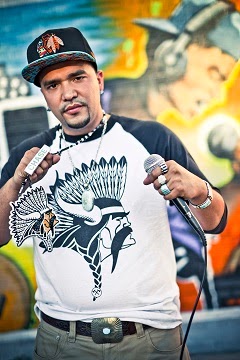
Chase Manhattan: A Musical Hip Hop Conversation

Chase Manhattan

In this musical conversation, hip hop artist Chase Manhattan speaks with guest interviewer Liz Przybylski. He shares how he puts together his music, and also talks about how family and place influence him. We listen to his track "For My Natives" together, and Chase offers thoughts about how hip hop can speak to social issues of importance in Native communities. And of course, there is a little beat boxing to round out the show.

Chase Manhattan is a Hip Hop/ Rap performing artist, and CEO of Shanob Ent. based out of the Twin Cities Minnesota. His music is influenced by his big brother and his Native American roots( Pine Ridge Oglala, Leech Lake Anishinaabe, and Muscogee Creek).

Chase's work has been nominated for a number of awards, 2009's "The Backside" was nominated for Best Hip Hop/Rap Album at the Northern American Indigenous Image Awards (NAIIA) in Albuquerque, New Mexico. It was also nominated for the 2009 Native American Music Awards (NAMA) in the category of Best Hip Hop/ Rap Album. In 2010/2011 he worked with organizations such as First Nations Composers Initiatives (FNCI), to develop community and culture though music.

To Learn More (podcast with interview)
https://archive.org/details/20140213341 
 https://archive.org/download/20140213341/20140213-341.mp3  

Monday, 21 October 2013

Investigating the Child and Family Services of Manitoba: A History of State Parenting


Manitoba Liberal Leader Jon Gerrard came to the University of Manitoba on Oct 17, 2013 to speak about his new report on the child welfare system in Manitoba. While speaking to the teacher candidates in the Aboriginal education class he talked about his long journey in gaining greater knowledge of many of the faults of system in Manitoba. It seems that while there are many caring individuals within the system the state as the final decision maker within our institution makes for a very poor parent. It seems that state can never be a loving or caring parent to the actual parents. The current CFS system is quick on the gun not taking due process to assess families and simply just removes the child. It is a poor parent indeed. 


Jon Gerrard and Robert-Falcon Ouellette 
While listening to Jon Gerrard presentation I was struck by the number of children currently in care. There are very few in Manitoba who will not say the child and family services model is broken. When a child is taking into custody they could be moved 15 times in a 7 year period. While this is certainly due to a number of reasons some being the child was returned to the parents a number of times and the placements in foster families was of a short duration. Other nations have similar problems, but they are experimenting. England is doing something completely different in the providing of services to families and ensuring the protection of children.

Some English Child and Family workers instead of having large case loads will only be assigned a few families. The working day will often begin at 7 AM when they arrive at a family’s home and consist of getting the children out of bed and packing them off to school. The workers must be tough because some parents will tell them to f*&^* off. They will also video tape the going on in the home and replay what transpired to the parents in order to find better actions to different circumstances such as when kids are screaming and parents are having trouble coping. We need a Grandmother program here in Manitoba someone to demonstrate good parenting and help keep people on track at home and in looking for working and education. Manitoba currently has over 9 700 children in custody. They have become an industry in and of themselves. These children have been removed either voluntary or forcibly from the custody of parents who are unable to ensure the basic needs of their children. The great majority of children move from short term to short term placements. The system has become a self-perpetuating machine that is unable to innovate or change.

While in many cases the removal of children from biological parents care may be the best course of action for the long term interests of the child. This is especially true if they can be placed in caring foster families on a long term basis. The province though is a poor substitute for the love of a parent. Due to the nature of bureaucracy little long-term human love is given these children and the provinces becomes like a cold parent or worse a dead-beat parent.  People need to learn how to be a parent from a Grandmother. Manitoba should institute a similar program as found in England and as talked about in your presentation the Nisichawayasihk Cree Nation. Families should not be forced into the program, but many who are eligible will surely gladly sign-up for the extra help in the fight to keep their children. Families should sign a contract about certain behaviors. The English experience finds that only 15% of families will break the contract forcing the government to proceed with the removal of the children. This is a stark improvement over current rates. Too often families will meet with bureaucrats a few times in a year as we are learning in the Sinclair enquiry. We need programs that develop a sense of relationship with not multiple agencies, but one individual who allows them to better understand what actions they need to take in order to keep their children.

As we continue to maintain a system which creates a class of people that are locked into perpetual poverty and dependence upon the state, many are asking for a different way of managing child and family services. The role of the province in the daily lives of people should only be in extreme circumstances, but their role should be insuring that people have the tools and are able to get back on track. As the families are better able to perform in their personal and social responsibilities they gradually should see less of the provincial grandmother, but some parents need the chance to learn those parenting skills and the role of the state is to provide the tools so the individual can create the life that all human being deserve.    

The principal problem is that often statistics are difficult to find and to compare between jurisdictions. It is quite easy to find the information for countries such as England. When a child has been in care of the state they are 50 times more likely to not finish school. Children are also likely to repeat the same patterns of behavior with their own off spring. They are 66 times more likely to see their children taken into custody. The cost for each child in custody is 67 777$. I suspect the statistics are the same here in Manitoba, but that is difficult to ascertain. There is an enormous amount of money being spent by CFS. Sometimes you ask would be better off cutting a check to each parent in order to vanquish the poverty of the family. 


http://youtu.be/BTdcG6V4ON4

Wednesday, 13 March 2013

A Life of Resilience: The Example of Elder Ralph Paul

Ralph Paul taken from Nativejournal.ca
This week it is a two part interview with the very active and inspiring Elder Ralph Paul from English River First Nation. Over the course of 50 minutes we discuss his life from when at age 6 he was sent to residential school in Saskatchewan to his later years as a chief for his community. After a very difficult time away from his mother, father and family at Residential school he was eventually chosen to be one of the first Indians to attend a white school in the Battleford area. A Catholic priest believed in his abilities and felt further education would be profitable to him. Ultimately he graduated and was offered the chance to enter teachers college when he earned a one year teaching certificate and so began a very long career. During that time there were not a lot of options available for young men, teacher, priest, or book keeper, so Ralph felt lucky. Ralph has worked in schools in Ontario, Manitoba and Saskatchewan. Eventually in 1973 he was working in Thompson as a school counsellor. He was advising children to get an education yet he did not have much of an education. In 1974 he enrolled at the University of Manitoba for a Bac of Ed degree. He was one of only 13 Indian students.

He also married to a lovely Scottish lady and had two children and both have been very successful in their chosen careers. He learned form his wife how to care and love children because it was not something that you would have learned in Residential school. He in time became the best father he could. The question is why some people are successful even after the horrors of the residential school era. Why do some have an inner resilience and have been able to become successful. We discussed marital relationships and how a man and woman should not discuss politics, but focus on loving each other.

Eventually he moved back to his reservation after he had retired in early 2000s. After 8 years near the community he was elected chief. A position he held for 4 years before taking another break. There was along discussion about politics, chief, financing, funding, per diems, treaties and other issues that have been very hot in the media with a lot of misnomers and misunderstanding. Ralph felt it is important that a chief speak the truth and understand the needs of the people he represents. It is not a top down approach, but consultation and involving people in the governance and running of the reserve.

He told a number of stories about how the elders felt that are the signing of the treaties it would take 7 generation for the Dene people to surpass the Moonyas people of
Canada
. He feels we are in the 6 generation and it will be his grandchildren and my children who will be the most successful and truly rise to their full potential.
To Learn More (Interview and Podcast Part I)

https://archive.org/download/RalphPaulPartIMixdown/ralph%20paul%20part%20i%20mixdown.mp3  
https://archive.org/details/RalphPaulPartIMixdown
To Learn more (Interview and Podcast Part II)
https://archive.org/details/RalphPaulPartIiMixdown
https://archive.org/download/RalphPaulPartIiMixdown/ralph%20paul%20part%20ii%20mixdown.mp3  


Citations


Thursday, 18 October 2012

Gerorge Erasmus, Greatest Canadian Speech, Bringing Canadians Together

This is an example of the fiery speeches that former Grand Chief George Erasmus was well known for and perhaps one of the greatest speeches in Canadian history. This is the 20th anniversary of when Erasmus spoke to a group of prominent Canadians during a panel called “Bringing Canadians Together” during the 125 anniversary celebrations of the founding of Canada held in 1992. During the speech he discusses South Africa and Apartheid. This speech is what inspired me as a 17 year old to travel to South Africa and observe the first free elections in that country. I had the chance to see Nelson Mandela and feel the hope of the Indigenous peoples of that country in their demands for FREEDOM.

http://archive.org/download/1993SpeechGivenByGeorgeErasmusAboutCanadaConfederation/AtTheEdgeOfCanadaGeorgeErasmusMainMixdown.mp3 
Listen to how he builds the rhythmic cadence as the speech continues, reaching multiple climaxes. Hearing the speech gives me chills down my spine.

Georges Henry Erasmus (born August 8, 1948, in Rae Edzo, Northwest Territories) is a strong Canadian aboriginal politician. Erasmus was born in a Dene community of the Northwest Territories to a family of 12 children. He attended high school in Yellowknife. He became president of the Dene Nation in 1974 and while president fought against the proposed Mackenzie Valley Pipeline. It was his involvement in Indigenous politics of this period which allowed his rise to prominence. He was the national chief of the Assembly of First Nations from 1985 to 1991. Erasmus was national chief of the Assembly of First Nations during the Oka Crisis. After serving two terms as national chief he co-chaired the Royal Commission on Aboriginal Peoples. If you compare these speeches from the current speeches given by the current AFN Grand Chief you will see major differences in style. Is this method of confrontation the best means to obtain the rights of Indigenous peoples in Canada? Are the people of Canada prepared to hear Erasmus and the words he has to say? Would you ever give a speech like this today or have current leaders moved to more professional negotiated discussions over resources and social services?


http://archive.org/download/1993SpeechGivenByGeorgeErasmusAboutCanadaConfederation/AtTheEdgeOfCanadaGeorgeErasmusMainMixdown.mp3